
Kenneth Kemp
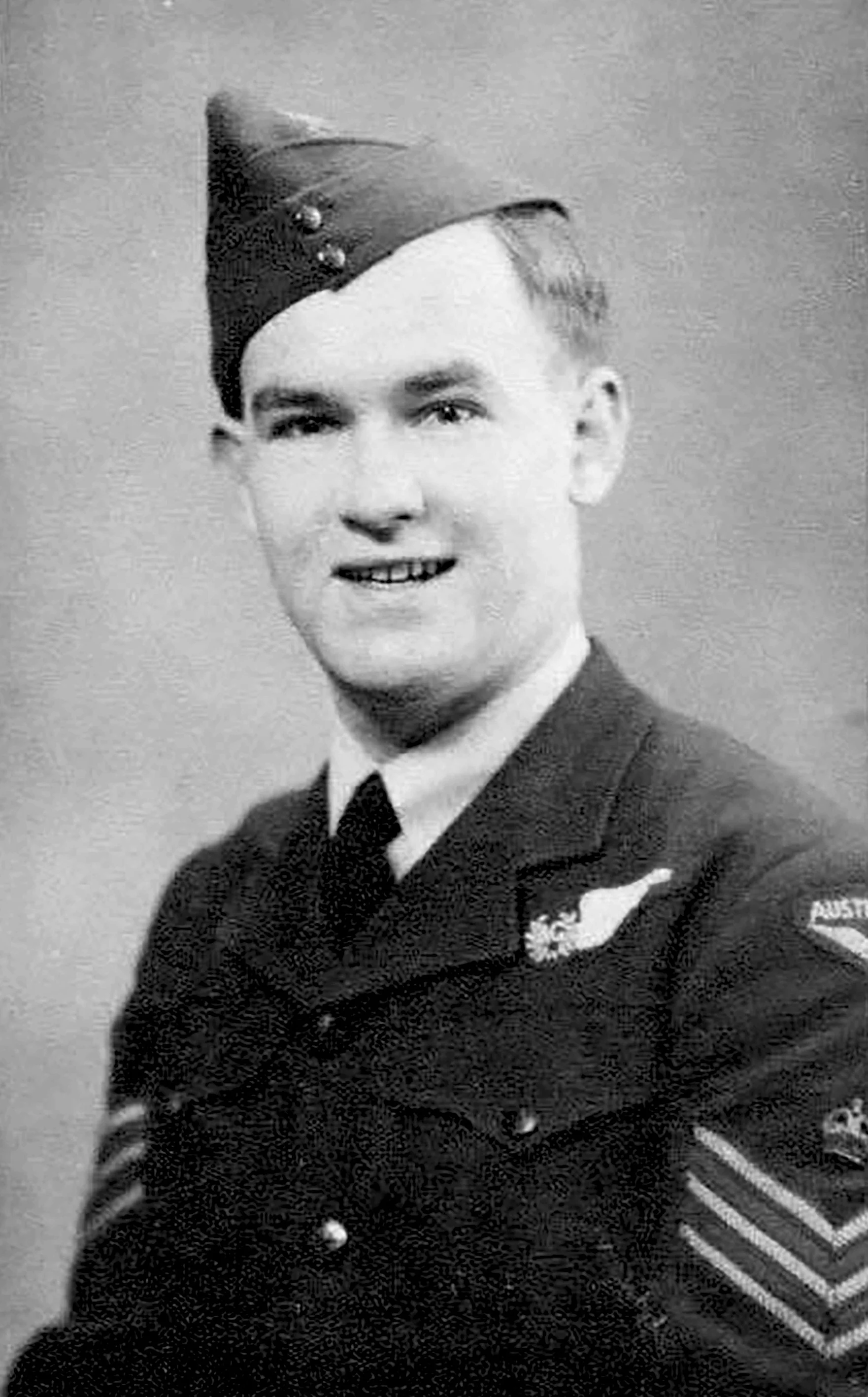
Before leaving for England, Ken's father gave him a small pouch containing a "lucky broad bean" he had carried throughout World War I. Robert believed it had helped bring him home safely and hoped it would do the same for his son. Ken treasured the keepsake throughout his life, along with many other mementoes from his service.
Ken had hoped to become a navigator. However, when 90 enlistees were divided into groups for pilots, navigators and gunners, Ken was number 61 in the line and was selected as a gunner. He became a tail gunner, one of the most dangerous roles in Bomber Command.
The risks were significant. The average tail gunner completed only three sorties, while the average Bomber Command airman completed 10. Those who survived 30 sorties were generally permitted to return home, with their service considered complete. Ken flew 33 sorties, spending 402 hours in the air as a rear gunner aboard a Halifax III bomber.
Ken experienced two incidents that could easily have ended his life.
On one occasion, he became seriously ill with a burst appendix immediately before a scheduled mission. Although the illness nearly killed him, it ultimately saved his life when his entire crew was lost in a crash over Halifax.
The second incident occurred on the night of November 29, 1944, during a bombing raid over Essen, Germany. After dropping their bombs, Ken's Halifax III was hit and burst into flames. Despite the damage, smoke and fire, Flying Officer L.E. Smith managed to fly the aircraft 150 miles across enemy territory before ordering the crew to abandon the bomber behind Allied lines.
During the evacuation, a fellow crew member, Flight Sergeant E.C. Norvall, had his parachute open inside the aircraft. Ken and another crew member helped gather the parachute, allowing Norvall to hold the canopy while they threw him from the aircraft. Ken then abandoned the bomber himself and parachuted into Belgium. His parachute became tangled in a tree, but he managed to cut himself free, kept the ripcord as a lifelong memento and eventually found refuge with a local family.
Back home, Ken's parents, Robert and Margaret, received a telegram informing them that their son was missing following the raid. Three agonising days later, a second telegram confirmed that Ken was safe and uninjured. Shortly afterwards, his parents received a handwritten message from him: "Safe in England. Don't worry. Love, Ken Kemp."
Ken returned to flying after the incident and continued serving as a rear gunner. His records show 265 hours of day flying and 137 hours of night flying across his 33 sorties. On May 29, 1945, he was awarded the Distinguished Flying Cross alongside Flight Officers L.E. Smith and R.B. Sprinall. Other members of the crew received the Distinguished Flying Medal. Ken was also awarded a gold Caterpillar Club pin, recognising airmen whose lives had been saved by parachute.
Ken was formally discharged on January 25, 1946. His service decorations included the Distinguished Flying Cross, 1939–45 Star, France and Germany Star, Defence Medal, British War Medal and Australian Service Medal, as well as lifetime membership of the Caterpillar Club.
He returned home with his English bride, Joan Smith, and together they returned to the Kemp family farm, where they raised four children: Robina, Barbara, Jacqueline and Robert.
Despite what he endured during the war, Ken remained a kind and gentle man, remembered by his family for his quiet humour. He rarely spoke about the war, but would share stories about his time in the United Kingdom, laugh about the funny moments and show his family the photographs and treasured mementoes he had kept from his service.
Ken was a Life Member of the RSL and a passionate supporter of Legacy. His courage, dedication and humility remain an enduring part of his family's memory and a testament to the service and sacrifice of those who served during World War II.
Warrant Officer Kenneth Kemble Kemp D.F.C. served with distinction in the Royal Australian Air Force during World War II, earning the Distinguished Flying Cross for his bravery and service.
Born into a family with a proud military tradition, Ken was the son of Lance Corporal Robert Arthur Kemp, who served with the First Australian Division, 6th Battalion, and was awarded the Distinguished Conduct Medal for an act of extreme bravery during the Battle of Albert in France in August 1918. At just 21, Robert volunteered for tank work and, after his tank caught fire under heavy enemy fire, helped rescue three wounded tank crew members who had been taken prisoner.
Following in his father's footsteps, Ken joined the Australian Military Forces at 17. Too young to enter the RAAF, he formally joined the Royal Australian Air Force after turning 18, on October 10, 1942. He trained at the Somerset Wireless School in Ballarat before undertaking gunnery training in Sale.
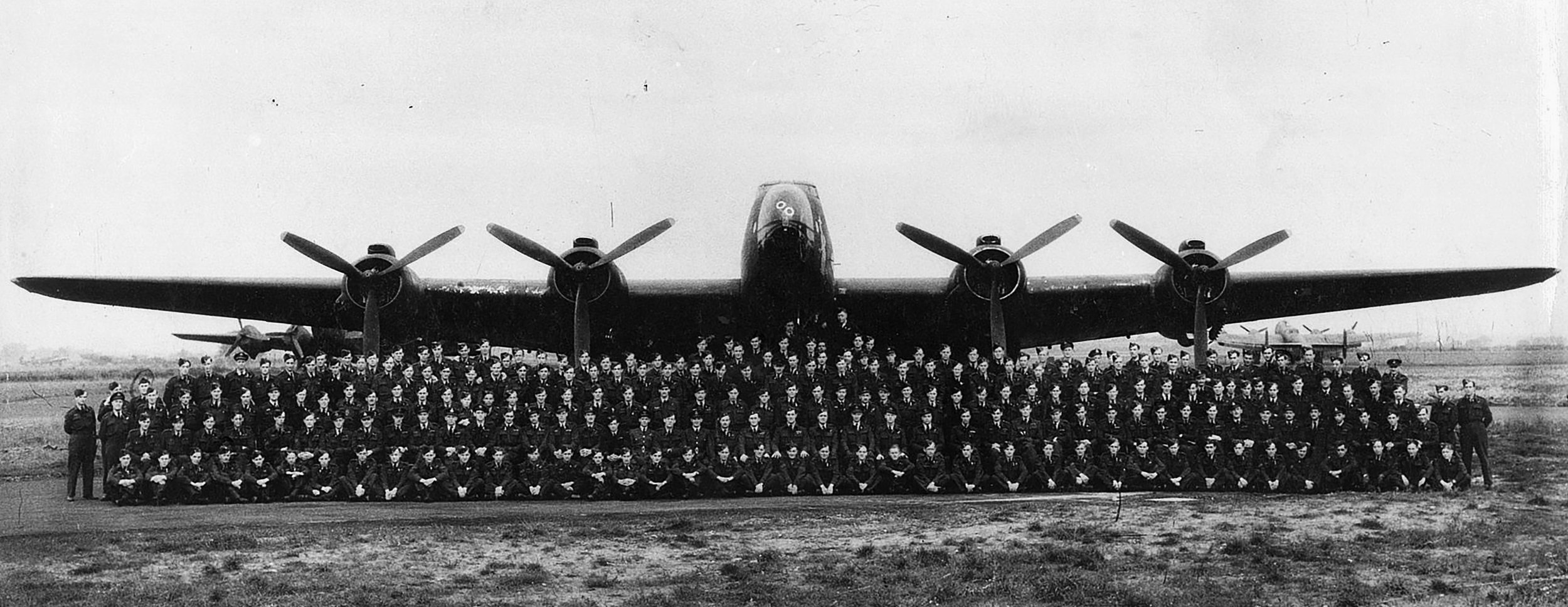
• Halifax squadron 1944. Kenneth Kemp, circle on far left.