
Norman Harold Gibbins
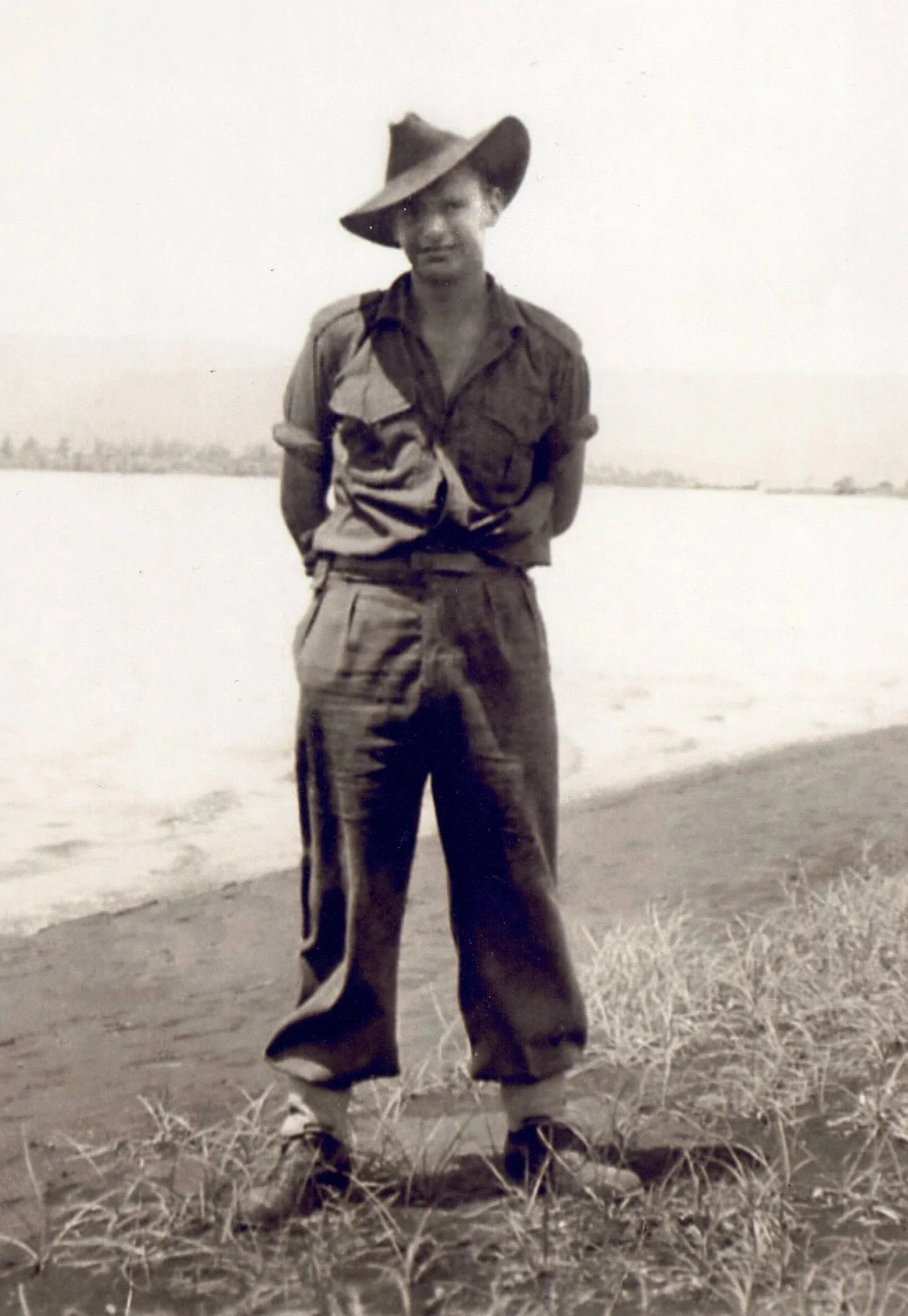
Early Life and Enlistment
Norman Harold Gibbins was born at Jeparit, Victoria, on 14 March 1925.
On 14 April 1943, Norman enlisted at the Recruitment Reception Depot at Royal Park, Melbourne, beginning his military service during the Second World War.
He subsequently transferred to the 6th Infantry Training Battalion and undertook training in the Wodonga–Bonegilla area. His military training continued at other locations, including Cowra and Canungra in Queensland. Canungra was home to the Australian Army's Jungle Warfare Training Centre, where soldiers prepared for the demanding conditions of operations in the Pacific theatre.
Service with the 2/9th Australian Infantry Battalion
13 September 1944 is recorded as the date of Norman's transfer to the 2/9th Australian Infantry Battalion, marking an important stage in his military service.
At the time, the battalion was at Kairi on the Atherton Tablelands in Queensland, where training and preparations for future operations continued. The 2/9th Battalion had previously served in New Guinea, and rebuilding its strength and preparing its men for further operations were important parts of its activities.
In May 1945, the battalion prepared for deployment to Borneo as part of the 7th Brigade. It subsequently participated in Operation Oboe Two, the Allied operation to capture Balikpapan in Dutch Borneo. The campaign aimed to dislodge Japanese forces and secure the area's strategically important oil facilities.
The Balikpapan campaign commenced in July 1945 and involved difficult fighting against Japanese defenders. The Australian forces faced challenging terrain, fortified positions and the continuing dangers of combat as they advanced to secure the area.
Japan announced its surrender on 15 August 1945, bringing the war towards its conclusion. However, military responsibilities did not end immediately. The 2/9th Battalion remained in Borneo, undertaking security, administrative and other post-war duties.
Post-war Service: Ambon and Rabaul
Following the end of hostilities, Norman's service continued through a series of unit postings as the Australian Army moved from wartime operations to post-war responsibilities.
In November 1945, his records indicate further postings involving the 2/14th Battalion and subsequently the 31st/51st Battalion. These movements formed part of the wider reorganisation of Australian forces following Japan's surrender.
His subsequent service included movements associated with Ambon and Rabaul. Australian troops undertaking post-war duties in these areas helped maintain security, support military administration and manage the transition from wartime operations to a reduced peacetime force.
Norman's recorded service with these units provides an important framework for understanding his experiences during this period..
Return to Australia and Discharge
In June 1946, Norman returned to Australia and continued undertaking general duties as his military service drew towards its conclusion.
He was discharged from the Australian Imperial Force at Royal Park, Melbourne, on 31st January 1947, bringing his period of wartime and post-war military service to an end.
According to the service totals recorded for his military history, Norman completed:
Australian service: 1,007 days
Overseas service: 384 days
These figures reflect a substantial period of service during the Second World War and its immediate aftermath, encompassing military training, overseas service and the transition to post-war duties.
Family Remembrance
Norman Harold Gibbins should be remembered not simply as a name in an Army record, but as an individual Australian whose service formed part of a much larger national experience.
Norman Harold Gibbins's military history is more than a sequence of dates, service numbers and unit postings. It is the story of a young man from rural Victoria who entered military service during the Second World War, undertook training for service overseas, and became associated with the Australian forces involved in the Balikpapan campaign in Borneo.
His subsequent postings to the 2/14th Battalion and the 31st/51st Battalion, followed by his recorded movements through Ambon to Rabaul, reveal another part of his experience: the transition from wartime operations to the administrative and garrison responsibilities that followed Japan's surrender. His service record provides the framework for reconstructing his journey.
Battalion histories and transport records can help establish the wider circumstances surrounding his postings, while family memories preserve the personal significance of his service.
By bringing these sources together, we can honour Norman not simply as a serviceman in the historical record, but as a member of a family whose experiences formed part of Australia's story during the Second World War and its immediate aftermath.
Service Number: VX146413
Enlisted: 30 November 1943
Last Rank: Private
Last Unit: 2nd/9th Infantry Battalion
Born:RAINBOW, VIC, 14 March 1925